Guide, for the Deal team
Qualify investors under s708
Record each investor's classification, get the accountant's certificate where one is needed, and keep the raise inside the 20-investor and $2 million caps.
Where: Raise hub, Compliance
Understand what the caps count
Without a disclosure document a company can issue to at most 20 investors who hold no exemption, or raise $2 million from them, in any rolling 12 months, counted across every raise the company has run. Certified sophisticated, professional and wholesale investors sit outside both caps while their certificate is current, and a certificate lasts two years from its date. The caps bind when shares are issued, not when the offer goes out.
Let the investor start the certificate themselves
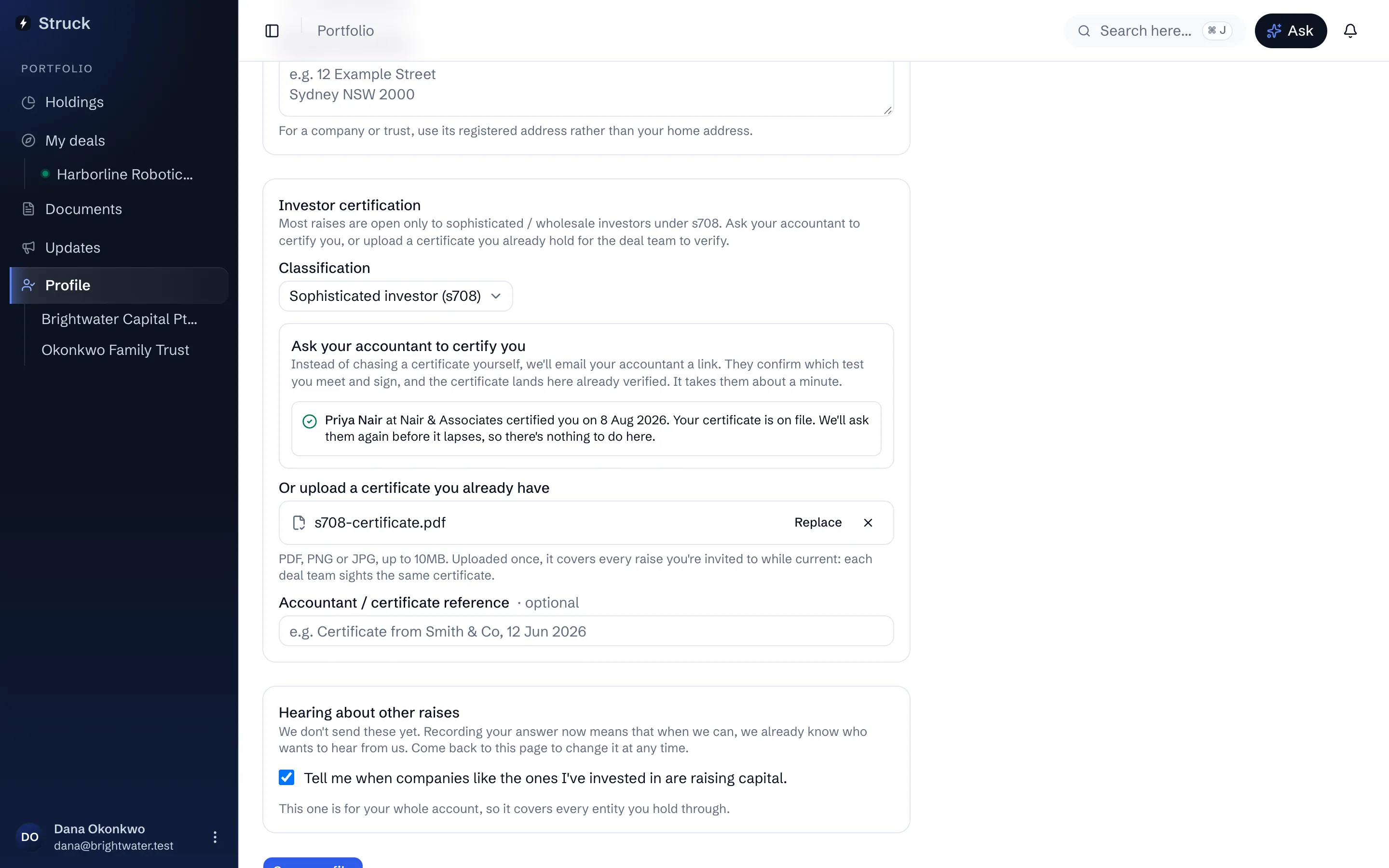
When an invited investor completes their profile, the Investor certification section asks for a Classification and offers two routes to a sophisticated certificate. Ask your accountant to certify you sends the accountant a link where they complete and sign the s708 certificate online, covering the investor's other entities on the same certificate if asked. Or upload a certificate you already have attaches one they hold.
The accountant's link stays open for 14 days. A certificate supports an offer made within two years of its date.
Record or verify the qualification
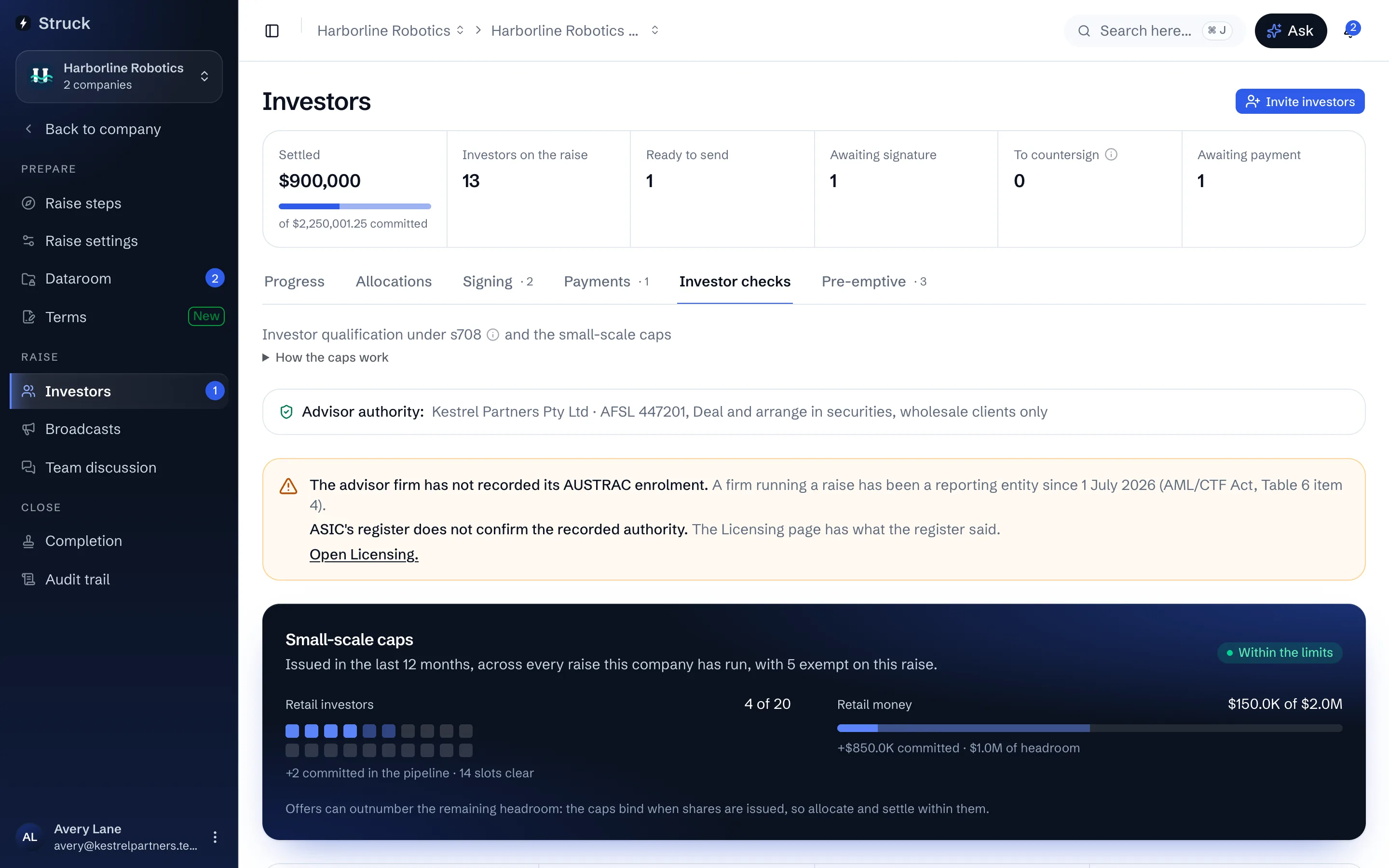
Open the raise's Investor checks tab, under Investors. Each investor shows their classification and certificate state; a submission waiting on you reads Pending review. Record s708 qualification lets you set the Classification, the Status (Verified, Pending review or Rejected) and the date the certificate or assessment was made. Choosing Rejected asks why: the investor is emailed that the certificate wasn't accepted, with your reason, and their profile asks them for a new one. Certificates to chase counts who still needs one.
Record when the offer was made
The Offer made column dates the personal offer to each investor. Record it from the row. It is the date the two-year certificate window and the 12-month cap window are measured against, so it should be the day the invitation went out.
Watch the headroom
The Small-scale caps band shows Retail investors as a count out of 20 and Retail money as an amount out of $2,000,000, with the slots and headroom that remain. Offers can outnumber the remaining headroom, because the caps bind at issue, so allocate and settle within them. Bare trusts count their beneficial members, not the trustee.
See the same picture across the firm
All investors, under the advisor workspace, lists every investor across every raise with the same certificate states and the same counts of certificates to chase and submissions pending review. A certificate verified once is reused on the next raise while it is still current. For someone in your firm's book who is not on a raise yet, open their row and press Record to enter a certificate you already hold. If they already have a certificate on Struck, you see it once you invite them to one of your raises. If you don't hold one, press Request certificate: they are emailed a link to add their certificate and share it with you, and the row shows Shared with you once they do.
Read next
- The s708 caps in practiceHow it works
- Your investor profileHow it works
- The advisor's investor directoryHow it works
- Licensing and authorityHow it works